
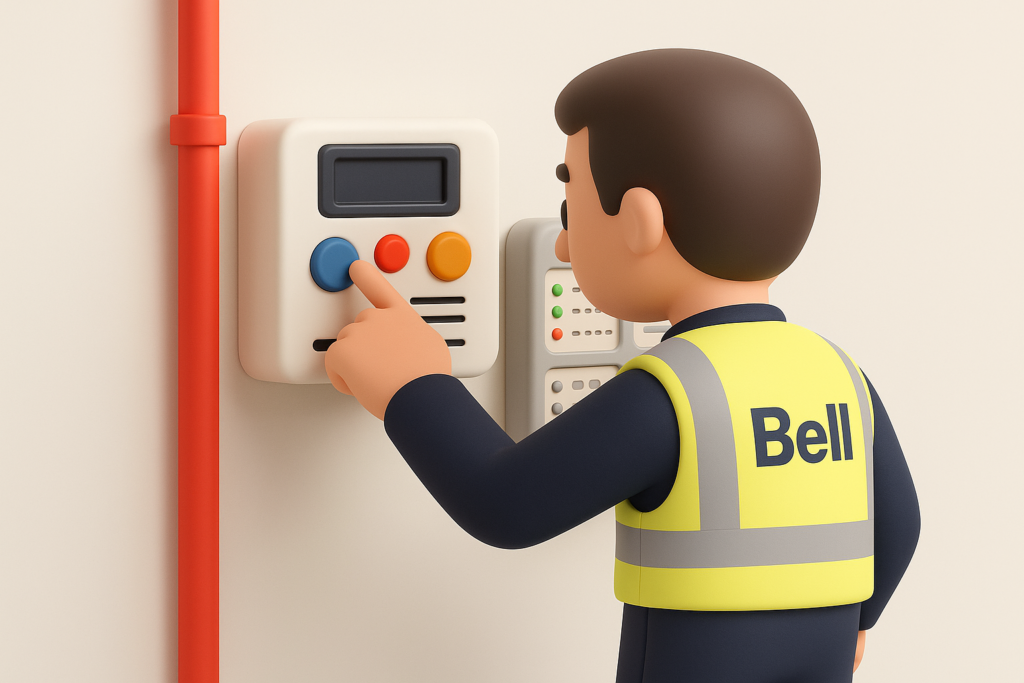
Bell Security Systems provides fire alarm installation for homes, landlords and businesses. Choose a wired or wireless system designed around your building, its occupants and your fire safety requirements.
Explore wireless fire alarms, Grade A systems and Ajax EN54, or request a fire alarm survey and quotation.
Planning a new system or replacing an ageing panel? We help you choose fire detection and alarm equipment for offices, shops, workshops and other commercial premises.
The starting point is your fire risk assessment and evacuation strategy. These inform detector coverage, alarm warning arrangements and any interfaces needed for your building. Commercial systems are normally designed with reference to BS 5839-1; domestic premises are considered under BS 5839-6 where applicable.
Tell us about your premises, existing equipment and working hours so we can plan the installation around access and disruption. Read BSI’s overview of the BS 5839 series.

Wireless fire alarms connect compatible devices by radio, reducing the need for new alarm cabling between them. They can be worth considering for occupied buildings, refurbishments and premises where cable routes are difficult.
Our approach starts with the building and the required coverage. A radio survey checks whether signals can reach the planned device positions through walls, floors and other obstructions. Power supplies, battery replacement and future servicing are part of the proposal.
Wireless does not mean maintenance-free or suitable for every site. We help compare a wireless design with wired alternatives, considering disruption, ongoing care and the total installation cost.
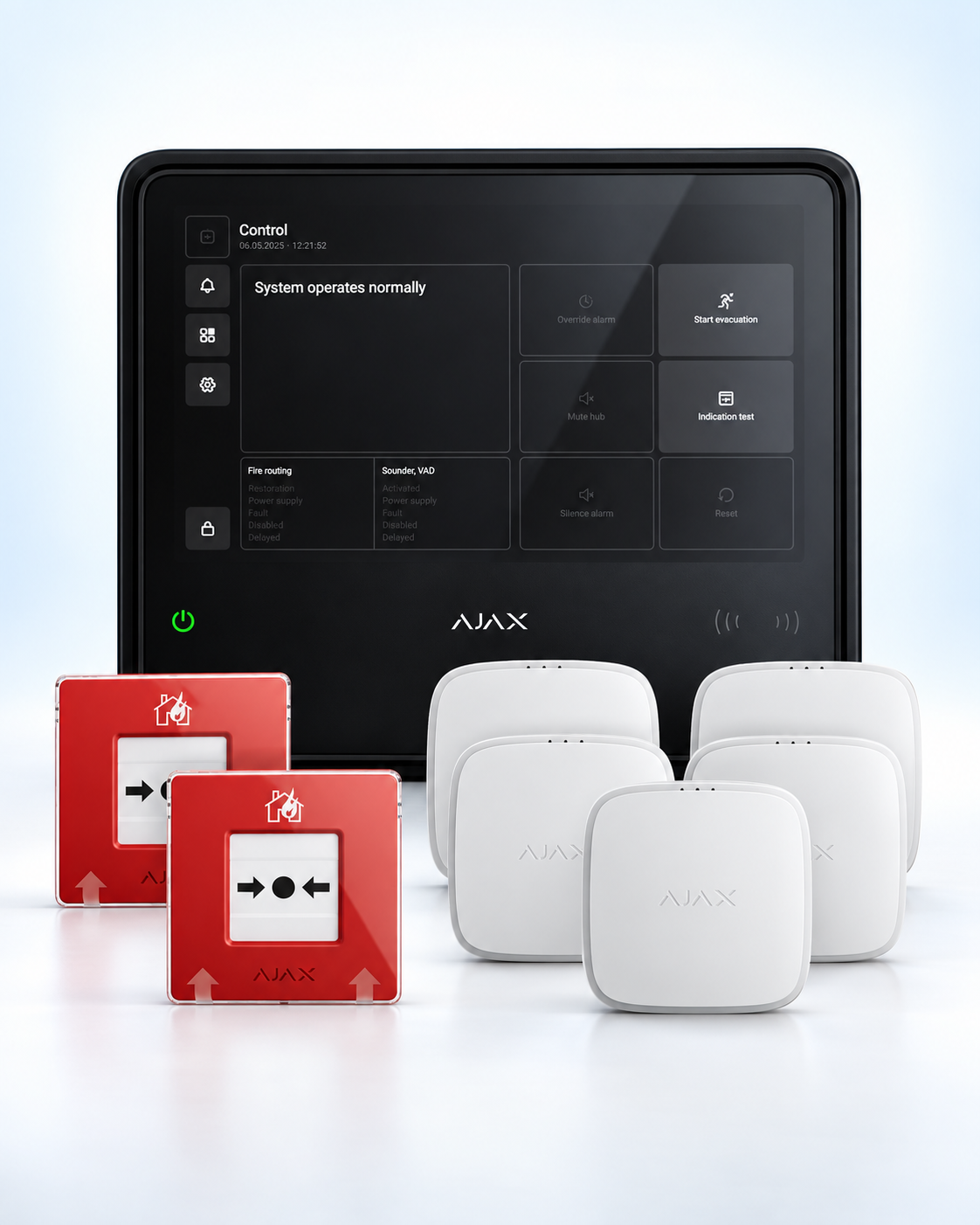
Ajax EN54 Line is a wireless commercial fire detection and alarm system. The range includes control and indicating equipment and compatible wireless addressable detection and alarm devices.
For an Ajax EN54 fire alarm installation, we assess the required coverage, radio performance, warning arrangements and available compatible devices. Product approvals must be checked for the specific equipment proposed; EN54 certification alone does not confirm that a completed installation meets the building’s requirements.
Discuss Ajax EN54 with us when planning a new system or refurbishment. The proposal should establish the exact equipment, design scope and any remote monitoring arrangements.
C-TEC
C-TEC offers conventional and addressable fire alarm systems. Addressable equipment can identify the device reporting an alarm or fault, helping staff locate the affected area.
We select the panel and compatible detectors to suit the building, required coverage and future plans. For an existing installation, we check the model and detector protocol before recommending an upgrade.
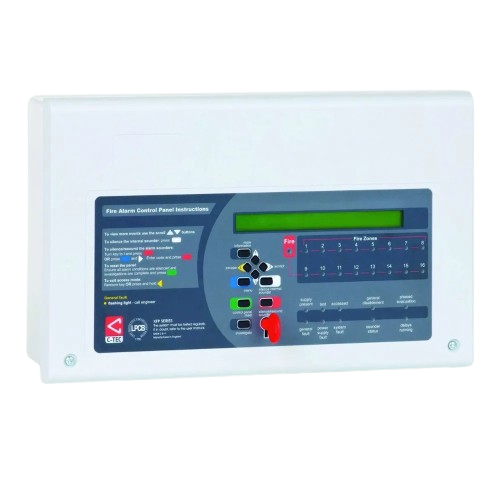
The number of loops, zones and devices is specified for your building and the selected C-TEC panel.
The detector protocol must match the panel variant. Existing devices are checked before reuse is proposed.
Clear device descriptions and a handover help nominated users recognise alarms, faults and required actions.
We check the approvals and documentation for the equipment specified. Product certification alone does not establish installation compliance.
Access for testing, fault investigation and replacement is considered when choosing and positioning equipment.
KENTEC SYNCRO
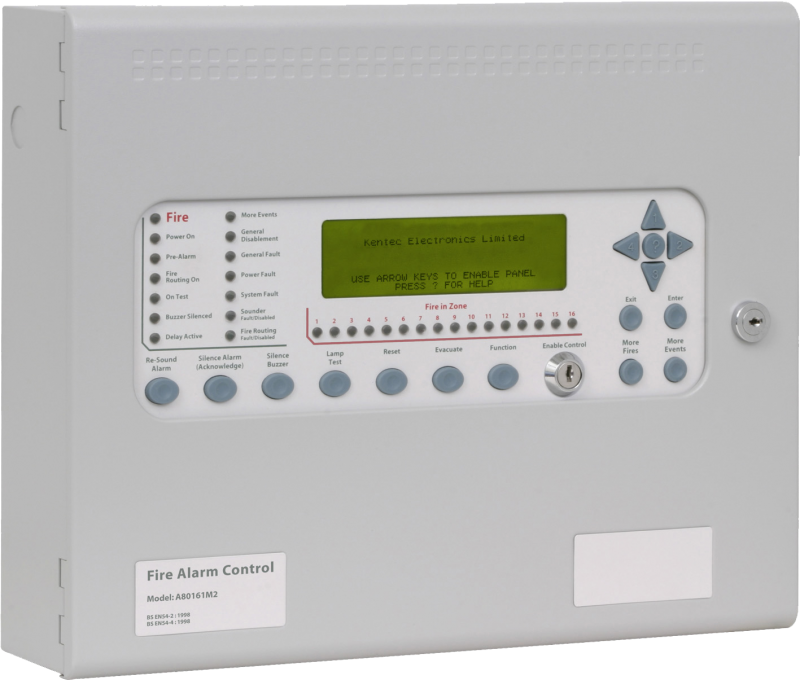
Kentec Syncro AS is an analogue addressable control panel range with one- and two-loop options. Device identification can help staff distinguish an alarm location from a fault requiring attention.
Panel variant, detector protocol and interface requirements must be selected together. We assess existing equipment, the required alarm operation and any expansion before specifying a Syncro system.
Loop capacity is checked against the chosen panel, device protocol and electrical load.
Syncro AS variants support particular detector protocols. Devices must be compatible with the selected variant.
Where networking is needed, we confirm the required hardware and compatibility for the proposed configuration.
The panel display provides alarm and fault information to support trained users in following the site procedure.
Any connections to other systems are specified and tested against the agreed fire strategy.
Battery capacity and power requirements are calculated for the equipment and standby period specified.
FIKE TWINFLEX
Fike TWINFLEXpro² is a two-wire fire alarm system. Compatible detection and alarm devices share a pair of wires per zone, which can simplify cable routes on suitable projects.
Multipoint ASD detectors offer smoke and heat detection options, with combined sounder options. We select devices and detection settings for the environment and check circuit limits before installation.

Two-wire describes the wiring method, not a fixed two-zone limit. Panel size is selected to suit the site.
Detector modes and any integral warning devices are selected for the room and system design.
Compatible call points allow people to raise the alarm. Positioning and protective covers are considered during design.
Additional detectors, sounders and interfaces must meet the panel’s compatibility and circuit requirements.
Shared zone wiring can reduce cable requirements. The final cost depends on coverage, access and existing wiring condition.
Connections to door releases or other equipment depend on compatible interfaces and the fire strategy. We agree the required operation and test it during commissioning.
Routine user tests and professional servicing support reliable operation. We explain the checks, record keeping and service schedule relevant to your installed system.
Nominated users need to understand the panel’s indications and the site procedure. Handover covers alarm and fault reporting, testing and authorised controls.
Smoke detectors are selected and positioned for the areas they protect. Cooking fumes, dust and other environmental conditions are considered to reduce unwanted alarms.
Heat detectors may suit areas where smoke detection would cause unwanted alarms. Detector choice and coverage follow the system design and assessed risks.
Remote monitoring requires suitable equipment, communications and an agreed monitoring service. It does not guarantee fire brigade attendance; response depends on the call-handling arrangements and local fire service policy.
Grade A fire alarms use detectors and alarm sounders with central control and indicating equipment and a standby power supply. Under BS 5839-6, the grade describes the equipment arrangement; the LD category describes detection coverage. The appropriate specification depends on the property and its assessed risks.

LD2 covers circulation spaces forming escape routes and specified higher-risk rooms or areas. The exact coverage must follow the assessed needs and relevant guidance for the premises.
LD3 covers circulation spaces forming escape routes. It should not be assumed sufficient for a particular home or HMO. LD1 provides wider detection where required by the design.
We discuss your premises, review the available fire risk assessment and identify existing equipment, access needs and the required coverage.
We propose equipment, detector locations, alarm arrangements and any interfaces, with an outline of the installation scope and costs.
We agree access and working arrangements, then install the specified panel, devices and wiring or radio equipment.
The system is tested against the agreed design, including detection, warning devices, relevant interfaces and radio performance where applicable.
We explain operation and routine checks, and provide the relevant commissioning records, system information and logbook arrangements.
We discuss servicing, fault reporting and any separately agreed monitoring. Changes to the building or its use may require the design to be reviewed.


The price depends on the size and use of the building, required coverage, equipment, cable routes or radio design, and access. A survey helps establish a meaningful quotation. Let us know whether you need a new installation, an extension or a replacement.
They can be useful where cabling is disruptive or difficult. Suitability depends on a radio survey, building construction, device locations and the required system specification. Wireless devices still need testing, battery management and servicing.
Ajax EN54 Line is a wireless commercial fire detection and alarm range built around its EN54 control and indicating equipment and compatible devices. The exact equipment and certificates must be checked for the project; domestic Ajax products should not be assumed interchangeable with EN54 Line.
Grade A may be specified for some residential properties, depending on their size, use and assessed risks. The equipment grade and detection category are separate decisions. For an HMO or converted property, the fire risk assessment and relevant housing requirements need to be considered.
For non-domestic systems, BS 5839-1:2025 recommends professional inspection and servicing at approximately six-month intervals, with the interval reviewed for the system and risks. Routine user testing is also needed. Domestic system checks vary by grade; follow the documented schedule for your installation.
Do not assume it will. A local alarm primarily warns occupants. Remote signalling needs a separately arranged monitoring service, and fire service attendance depends on local policy and the circumstances. Follow your evacuation procedure and call 999 from a safe place if there is a fire.
We first assess the panel, wiring, devices and available records. Compatibility and condition determine what can be retained. A new panel does not automatically make older devices suitable, and a change in building use may require wider alterations.
Warning arrangements must be designed for the occupants and building. Sound levels, closed doors and sleeping accommodation need consideration. Additional visual or tactile warning devices may be needed; a standard sounder should not be assumed suitable for everyone.
Discuss Your Property and Requirements
Tell us your postcode, property type and whether you need a new system or an upgrade. If you have a fire risk assessment or details of an existing panel, mention these when requesting a callback.
Use the form to discuss wired, wireless, Grade A or Ajax EN54 fire alarm installation with Bell Security Systems.